
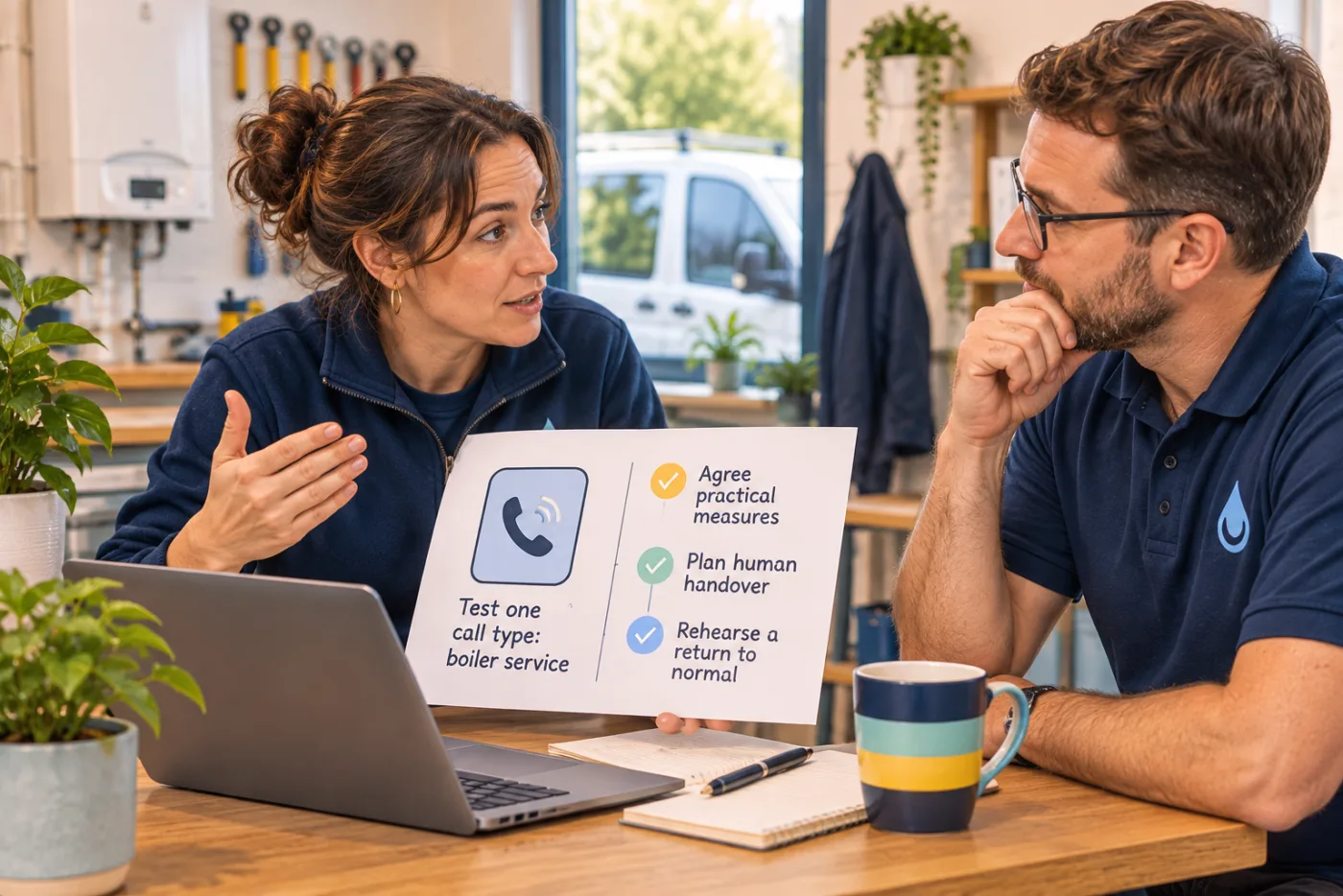
An AI voice pilot can test one narrow job without rebuilding your business processes. Start with a manageable call type, keep your team and existing systems in charge, and agree when to continue or stop.
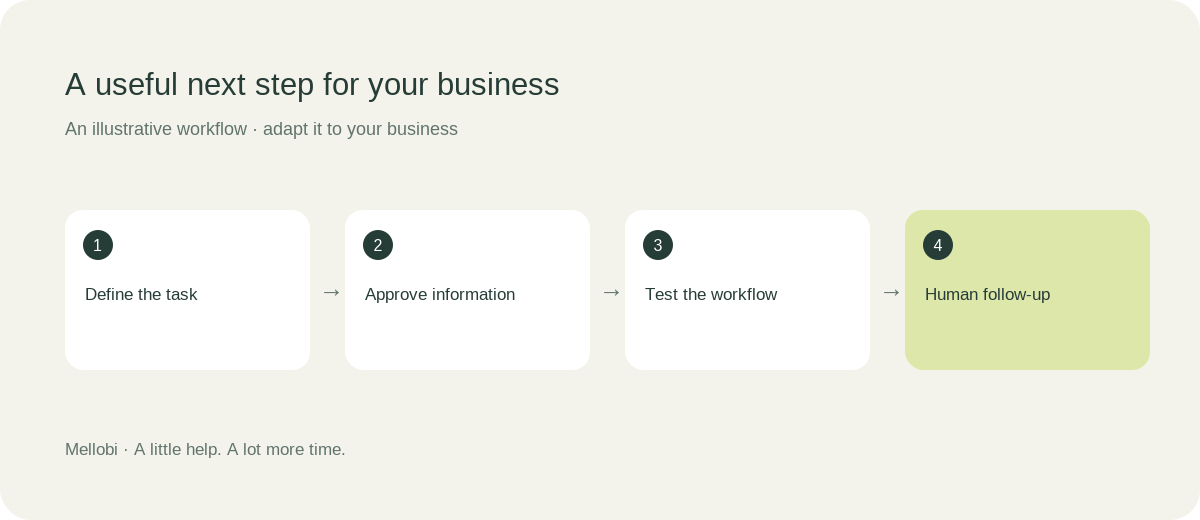
Illustrative process; agree the steps and human confirmation for your own business.
Choose one call type and set boundaries
Pick a frequent, straightforward request, such as taking a callback request outside opening hours. Write down what the assistant may ask, what information it may give and which calls need a person’s attention.
Set the pilot’s hours and duration, and name someone to check it. If your phone setup permits, use a separate test number or limited call routing. Leave your usual booking, payment and customer-service processes unchanged.
Illustrative example: a salon trials collecting appointment requests after closing. If the agreed contact is unavailable, callers can leave a voicemail or request a callback under the salon’s agreed process. Staff check availability and confirm bookings; the assistant does not promise an appointment.
Agree what success looks like
Before switching on, record roughly how many relevant calls arrive, how many need a callback and how long staff spend following up. Note how you counted them so you can compare like with like.
Choose a few measures: accurately captured requests, failed handovers, time spent correcting details and caller feedback. Set a review date and agree what your team considers workable. A small trial may expose problems without proving long-term savings.
The government’s AI evaluation guidance recommends planning evaluation and a baseline early. It is intended for central-government and public-service AI projects; adapt those principles to your small-business trial.
Test, hand over and decide
Before taking real calls, ask staff to test normal requests, unclear speech, interruptions, silence and requests outside the agreed scope. Check that the assistant does not invent answers or imply that a booking is confirmed.
During staffed hours, test immediate transfer to the agreed person. Outside those hours, agree a voicemail or callback process, including who checks messages and when they respond. Tell callers what to expect, and test the alternative if the contact or connection is unavailable.
Write down how to pause the pilot and restore normal call handling: who can do it, how to restore the previous route and who checks it worked. Rehearse the reversal before launch.
At the review, continue if the agreed measures are met and handovers work. Fix and retest if details need correction; stop if problems cannot be resolved or the trial is not useful. As a practical rule, pause and investigate any failed handover before expanding the trial.
Check before connecting tools
Ask suppliers about setup, costs and support. Who can access caller data, including recordings or transcripts? Are those records needed, how long are they retained, and can recording be disabled when unnecessary? Check what callers should be told. The ICO’s AI security guidance discusses security and data minimisation; it is under review.
Why Mellobi
Mellobi offers practical digital help for owner-run businesses, including help with business calls. Scope, setup and ongoing care are agreed before activation, and complicated requests are passed to an agreed human contact.
Ask for an example or talk to our team about your existing tools and a separately scoped workflow.